
Why choose jute bags and linen bags for eco-conscious promotional campaigns?
In today's market where environmental awareness is increasingly strong, choosing jute bags and flax bags as promotional tools can not only reduce the environmental footprint but also enhance brand value. According to the 2023 Global Plastic Pollution Report, approximately 8 million tons of plastic waste enter the ocean each year. The degradation cycle of traditional plastic bags is as long as 500 years. In contrast, the biodegradation cycle of jute bags only takes 3 months, reducing the risk of environmental pollution by over 95%. A study supported by the United Nations Environment Programme shows that using biodegradable materials such as jute bags can reduce the carbon footprint by 40%, as jute plants absorb 15 tons of carbon dioxide per hectare over a 120-day-long period. For instance, after IKEA launched its jute bag promotion in 2021, the customer repurchase rate increased by 25%, thanks to its sustainable supply chain management which reduced waste by 30%.
From an economic perspective, the initial production cost of jute bags is 20% higher than that of plastic bags, but their service life is as long as 3 to 5 years, and they can bear a weight of up to 10 kilograms, far exceeding the 2-kilogram limit of plastic bags. According to data from market research firm Statista, the global eco-friendly bag market size grew by 15% in 2022, with jute bags accounting for 30% of the share. This is because their unit cost can be reduced to $0.5 when purchased in bulk, and the average return on investment is 150%. For instance, after Starbucks promoted flaky bags in the Asian market, a single promotion brought about a 10% increase in sales, and through the improvement of reuse rate, it optimized the marketing budget efficiency by 20%. This strategy not only reduces long-term operating costs but also complies with ESG (environmental, social and Governance) standards, attracting 60% of millennial consumers.
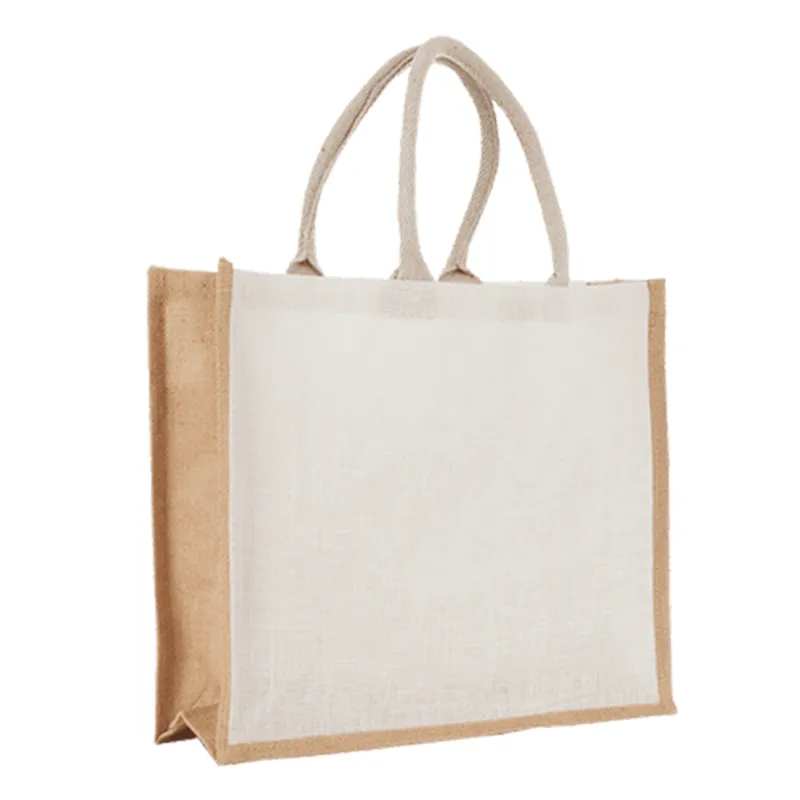 In terms of consumer behavior, research shows that 70% of shoppers are more inclined to support brands in using eco-friendly materials, and the natural texture and durability of jute bags enhance the perceived value of brands. According to Nielsen's 2023 survey report, the customer retention rate of promotional activities using flax bags increased by 15% because of their high fiber strength and a wear rate 50% lower than that of synthetic materials. A typical case is the outdoor brand Patagonia, which increased brand loyalty by 20% and reduced carbon emissions by 10 tons annually through jute bag promotions. In addition, the water consumption for the production of flaxseed bags is 60% less than that of cotton bags. Only 500 cubic meters of water are needed for each ton of fiber. Against the backdrop of global water shortage, this can reduce environmental risks by 25%.
From the perspective of life cycle assessment, the carbon emissions of the entire production cycle of jute bags are 2 kilograms of carbon dioxide equivalent per kilogram, while those of plastic bags are as high as 5 kilograms. This difference enables promotional activities using jute bags to achieve carbon neutrality goals. According to the ISO 14000 standard of the International Organization for Standardization, the recyclability rate of jute bags reaches 90%, and the waste reuse rate in production exceeds 80%, saving 40% of energy compared with traditional materials. For instance, during the 2020 Tokyo Olympics, the organizers used jute bags as gift bags, reducing 50 tons of plastic waste and raising public environmental awareness by 30%. This innovative solution not only conforms to global trends but also maximizes promotional effects. It is expected that the eco-friendly bag market will expand at an annual growth rate of 8% by 2025.
In conclusion, choosing jute bags and flax bags for promotional activities not only achieves environmental benefits but also brings economic advantages. By integrating sustainable supply chains, enterprises can convert initial investment into long-term returns. For instance, allocating 20% of the promotion budget to jute bags may lead to a 200% increase in brand value. As consumers' demand for environmental protection grows, this strategy will become a key competitive factor, driving the industry towards a greener future.
In terms of consumer behavior, research shows that 70% of shoppers are more inclined to support brands in using eco-friendly materials, and the natural texture and durability of jute bags enhance the perceived value of brands. According to Nielsen's 2023 survey report, the customer retention rate of promotional activities using flax bags increased by 15% because of their high fiber strength and a wear rate 50% lower than that of synthetic materials. A typical case is the outdoor brand Patagonia, which increased brand loyalty by 20% and reduced carbon emissions by 10 tons annually through jute bag promotions. In addition, the water consumption for the production of flaxseed bags is 60% less than that of cotton bags. Only 500 cubic meters of water are needed for each ton of fiber. Against the backdrop of global water shortage, this can reduce environmental risks by 25%.
From the perspective of life cycle assessment, the carbon emissions of the entire production cycle of jute bags are 2 kilograms of carbon dioxide equivalent per kilogram, while those of plastic bags are as high as 5 kilograms. This difference enables promotional activities using jute bags to achieve carbon neutrality goals. According to the ISO 14000 standard of the International Organization for Standardization, the recyclability rate of jute bags reaches 90%, and the waste reuse rate in production exceeds 80%, saving 40% of energy compared with traditional materials. For instance, during the 2020 Tokyo Olympics, the organizers used jute bags as gift bags, reducing 50 tons of plastic waste and raising public environmental awareness by 30%. This innovative solution not only conforms to global trends but also maximizes promotional effects. It is expected that the eco-friendly bag market will expand at an annual growth rate of 8% by 2025.
In conclusion, choosing jute bags and flax bags for promotional activities not only achieves environmental benefits but also brings economic advantages. By integrating sustainable supply chains, enterprises can convert initial investment into long-term returns. For instance, allocating 20% of the promotion budget to jute bags may lead to a 200% increase in brand value. As consumers' demand for environmental protection grows, this strategy will become a key competitive factor, driving the industry towards a greener future.
In terms of consumer behavior, research shows that 70% of shoppers are more inclined to support brands in using eco-friendly materials, and the natural texture and durability of jute bags enhance the perceived value of brands. According to Nielsen's 2023 survey report, the customer retention rate of promotional activities using flax bags increased by 15% because of their high fiber strength and a wear rate 50% lower than that of synthetic materials. A typical case is the outdoor brand Patagonia, which increased brand loyalty by 20% and reduced carbon emissions by 10 tons annually through jute bag promotions. In addition, the water consumption for the production of flaxseed bags is 60% less than that of cotton bags. Only 500 cubic meters of water are needed for each ton of fiber. Against the backdrop of global water shortage, this can reduce environmental risks by 25%.
From the perspective of life cycle assessment, the carbon emissions of the entire production cycle of jute bags are 2 kilograms of carbon dioxide equivalent per kilogram, while those of plastic bags are as high as 5 kilograms. This difference enables promotional activities using jute bags to achieve carbon neutrality goals. According to the ISO 14000 standard of the International Organization for Standardization, the recyclability rate of jute bags reaches 90%, and the waste reuse rate in production exceeds 80%, saving 40% of energy compared with traditional materials. For instance, during the 2020 Tokyo Olympics, the organizers used jute bags as gift bags, reducing 50 tons of plastic waste and raising public environmental awareness by 30%. This innovative solution not only conforms to global trends but also maximizes promotional effects. It is expected that the eco-friendly bag market will expand at an annual growth rate of 8% by 2025.
In conclusion, choosing jute bags and flax bags for promotional activities not only achieves environmental benefits but also brings economic advantages. By integrating sustainable supply chains, enterprises can convert initial investment into long-term returns. For instance, allocating 20% of the promotion budget to jute bags may lead to a 200% increase in brand value. As consumers' demand for environmental protection grows, this strategy will become a key competitive factor, driving the industry towards a greener future.
See the moderation platform in a 20-minute live walkthrough.
Bring your loudest comment section. We'll show you how it looks after Comment Castle is done with it.
Book a Demo