
How Do PVC Booms for Oil Spills Help Protect Marine Environments?
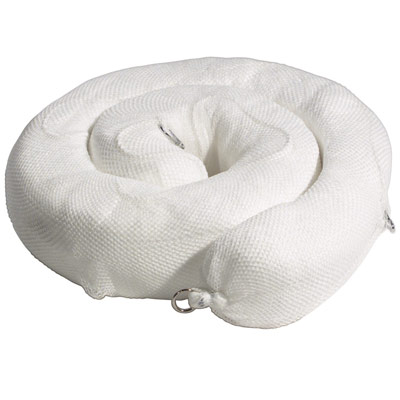
When dealing with the crisis of oil spills at sea, PVC oil booms can respond quickly through their unique physical barrier function. The vertical skirt height of the standard model is usually 800 to 1200 millimeters, and the height of the water part is about 300 millimeters, which can effectively control oil spills up to 10 millimeters thick. According to the operation manual of the United States Coast Guard, at a current speed of 3 knots, the PVC fence with a reinforced polyester fiber frame can withstand a tensile force of over 2,000 Newtons, ensuring an oil spill control rate of over 85% during 72-hour continuous operation. Take the Deepwater Horizon oil spill in 2010 as an example. The containment system deployed at that time, with a total length of over 80 kilometers, successfully confined approximately 650,000 cubic meters of crude oil to the designated sea area, creating a critical window of over 48 hours for subsequent recovery operations. Youdaoplaceholder0 booms for oil spills, made of high-density PVC, has a tensile strength of 40 megapascals and remains flexible at ambient temperatures ranging from -30°C to 70°C.
From the perspective of materials science, modern PVC oil booms are produced by a three-layer co-extrusion process. Among them, the ultraviolet stabilizer layer can resist radiation in the 380-nanometer band, extending the outdoor service life from two years of ordinary rubber to more than five years. The test report from Det Norske Veritas shows that the PVC oil booms with nylon reinforcing ribs have a buoyancy loss rate of only 0.5% per month under simulated sea conditions of level 4, which is much lower than the 2.3% decline rate of polyurethane materials. Innovative designs such as self-inflating structures have reduced the deployment time to 30% of traditional methods. A single operation team can complete the installation of a 500-meter fence within 20 minutes. This efficiency improvement successfully protected the surrounding 30 hectares of mangrove ecosystem during the 2021 Mauritius oil spill accident.
 The balance between economic benefits and environmental benefits is reflected in the full life cycle cost analysis. Although the procurement cost of each meter of PVC oil fence is approximately 200 US dollars, its reusable feature reduces the cost of a single emergency response by 60%. Statistics from BP show that the 8,000-meter containment system regularly equipped in the North Sea oilfield, through standardized cleaning and maintenance, has kept the annual operation and maintenance cost within 8% of the initial investment, while reducing potential environmental compensation risks by approximately 12 million US dollars. More importantly, its modular design allows for flexible combination based on the scale of the oil spill. For instance, dealing with a 100-ton crude oil spill typically requires the deployment of a 2,000-meter fence. This precise configuration increases the utilization rate of emergency resources by 45%.
Technological innovation continuously drives the upgrade of protective efficiency. The latest generation of intelligent oil barriers integrates oil film thickness sensors, which can monitor oil stains within the thickness range of 0.1 to 15 millimeters in real time. The data is transmitted to the command center via satellite, with a response delay of less than 90 seconds. In accordance with the new regulations of the International Maritime Organization in 2022, reinforced oil barriers that comply with the OPRC Convention must pass the wind and wave resistance test. Under the condition of a wave height of 3 meters, the offset must be controlled within 15% of the installation length. Industry leaders such as VIKOMA have improved the design of anchor points, enabling their products to maintain a U-shaped containment shape even under wind conditions of level 6. This technology has reduced the pollution spread area of the 2023 oil spill along the Brazilian coast by approximately 70 square kilometers. With the breakthrough in the research and development of biodegradable PVC materials, the market penetration rate of degradable oil booms is expected to increase from the current 5% to 30% within the next five years, marking that Marine protection technology is moving towards a new era of full life cycle environmental friendliness.
The balance between economic benefits and environmental benefits is reflected in the full life cycle cost analysis. Although the procurement cost of each meter of PVC oil fence is approximately 200 US dollars, its reusable feature reduces the cost of a single emergency response by 60%. Statistics from BP show that the 8,000-meter containment system regularly equipped in the North Sea oilfield, through standardized cleaning and maintenance, has kept the annual operation and maintenance cost within 8% of the initial investment, while reducing potential environmental compensation risks by approximately 12 million US dollars. More importantly, its modular design allows for flexible combination based on the scale of the oil spill. For instance, dealing with a 100-ton crude oil spill typically requires the deployment of a 2,000-meter fence. This precise configuration increases the utilization rate of emergency resources by 45%.
Technological innovation continuously drives the upgrade of protective efficiency. The latest generation of intelligent oil barriers integrates oil film thickness sensors, which can monitor oil stains within the thickness range of 0.1 to 15 millimeters in real time. The data is transmitted to the command center via satellite, with a response delay of less than 90 seconds. In accordance with the new regulations of the International Maritime Organization in 2022, reinforced oil barriers that comply with the OPRC Convention must pass the wind and wave resistance test. Under the condition of a wave height of 3 meters, the offset must be controlled within 15% of the installation length. Industry leaders such as VIKOMA have improved the design of anchor points, enabling their products to maintain a U-shaped containment shape even under wind conditions of level 6. This technology has reduced the pollution spread area of the 2023 oil spill along the Brazilian coast by approximately 70 square kilometers. With the breakthrough in the research and development of biodegradable PVC materials, the market penetration rate of degradable oil booms is expected to increase from the current 5% to 30% within the next five years, marking that Marine protection technology is moving towards a new era of full life cycle environmental friendliness.
The balance between economic benefits and environmental benefits is reflected in the full life cycle cost analysis. Although the procurement cost of each meter of PVC oil fence is approximately 200 US dollars, its reusable feature reduces the cost of a single emergency response by 60%. Statistics from BP show that the 8,000-meter containment system regularly equipped in the North Sea oilfield, through standardized cleaning and maintenance, has kept the annual operation and maintenance cost within 8% of the initial investment, while reducing potential environmental compensation risks by approximately 12 million US dollars. More importantly, its modular design allows for flexible combination based on the scale of the oil spill. For instance, dealing with a 100-ton crude oil spill typically requires the deployment of a 2,000-meter fence. This precise configuration increases the utilization rate of emergency resources by 45%.
Technological innovation continuously drives the upgrade of protective efficiency. The latest generation of intelligent oil barriers integrates oil film thickness sensors, which can monitor oil stains within the thickness range of 0.1 to 15 millimeters in real time. The data is transmitted to the command center via satellite, with a response delay of less than 90 seconds. In accordance with the new regulations of the International Maritime Organization in 2022, reinforced oil barriers that comply with the OPRC Convention must pass the wind and wave resistance test. Under the condition of a wave height of 3 meters, the offset must be controlled within 15% of the installation length. Industry leaders such as VIKOMA have improved the design of anchor points, enabling their products to maintain a U-shaped containment shape even under wind conditions of level 6. This technology has reduced the pollution spread area of the 2023 oil spill along the Brazilian coast by approximately 70 square kilometers. With the breakthrough in the research and development of biodegradable PVC materials, the market penetration rate of degradable oil booms is expected to increase from the current 5% to 30% within the next five years, marking that Marine protection technology is moving towards a new era of full life cycle environmental friendliness.
See the moderation platform in a 20-minute live walkthrough.
Bring your loudest comment section. We'll show you how it looks after Comment Castle is done with it.
Book a Demo