
How Can Electrical Cabinet Cooling Improve Energy Efficiency?
Effective electrical cabinet thermal management technology directly enhances overall energy efficiency through precise temperature control. According to a research report by the International Energy Agency, 40% of industrial electricity is consumed by power equipment, and 15% of the energy consumption is due to the efficiency decline caused by overheating of components inside electrical cabinets. After adopting the intelligent electrical cabinet cooling solution, the operating efficiency of the frequency converters in semiconductor manufacturing enterprises has increased by 7%, and a single device can save more than 12,000 kilowatt-hours of electricity annually. Take a certain factory of TSMC as an example. By deploying a closed-loop water cooling system, it has stably controlled the junction temperature of power devices below 85°C, increasing the energy conversion efficiency from 92% to 96%. The annual reduction in heat energy loss is equivalent to saving 1.8 million yuan in electricity fees.
In terms of dynamic load regulation, modern cooling systems can achieve a 35% reduction in energy consumption compared to traditional fixed-frequency equipment through the coordinated control of variable-frequency compressors and EC fans. Cases in the food and beverage industry show that cabinet air conditioners using intelligent temperature control algorithms reduce the power consumption of the cooling system itself by 45%, and at the same time compress the temperature fluctuation range inside the cabinet from ±5°C to ±1°C. This precise temperature control reduces the operation error rate of the PLC module by 60%, avoids energy waste caused by system restarts, and lowers the overall energy consumption intensity of the production line by 18%.
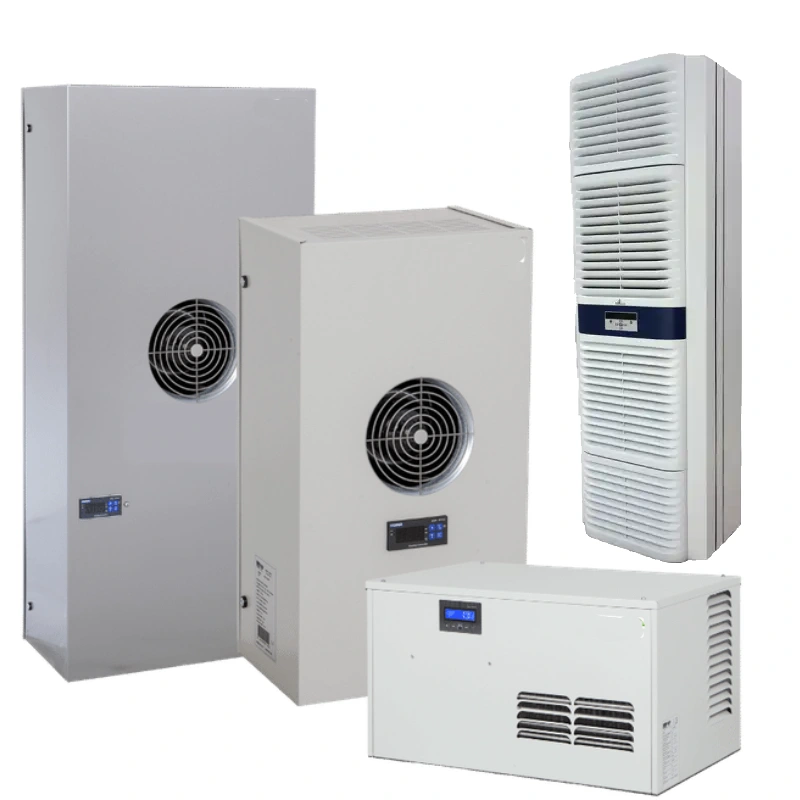 From the perspective of equipment life cycle, data from the metallurgical industry shows that when electrical cabinets operate continuously at the optimal ambient temperature of 25°C, the lifespan extension rate of IGBT modules reaches 300%, and the equipment replacement cycle is extended from 3 years to 9 years. After the introduction of the forced air cooling system to the steel rolling production line of Shougang Group, not only was the failure rate of power units reduced by 75%, but also the annual maintenance cost was saved by 800,000 yuan due to the reduced frequency of spare parts replacement, with an investment payback period of only 11 months. The indirect energy-saving benefits brought by the cooling system even exceed the direct electricity bill savings, accounting for 40% of the overall energy efficiency improvement contribution.
Research in the field of data center infrastructure has confirmed that server cabinets using liquid cooling technology are more energy-efficient than traditional air cooling solutions by over 30%. Google's carbon neutrality roadmap released in 2023 shows that by integrating the cabinet cooling system with the waste heat recovery device, it has optimized the PUE value from 1.25 to 1.12, reducing cooling energy consumption by 80,000 tons of carbon dioxide emissions annually. This innovative solution has increased power usage efficiency by 10 percentage points and raised the computing performance density of servers by 22%, achieving a dual breakthrough in energy efficiency and computing performance.
Overall, a scientific cooling strategy for electrical cabinets can achieve an overall energy efficiency improvement of 15% to 25% through multiple approaches such as reducing system operating resistance, minimizing reactive power loss, and extending equipment lifespan. According to ABB Group's estimation, if the global industrial system is comprehensively upgraded to intelligent cooling devices, the annual electricity savings could reach 120 billion kilowatt-hours, equivalent to a reduction of 85 million tons of carbon emissions. This technological innovation not only meets the requirements for equipment reliability stipulated in the IEC 62443 cybersecurity standard, but also provides key technical support for achieving the carbon neutrality goal.
From the perspective of equipment life cycle, data from the metallurgical industry shows that when electrical cabinets operate continuously at the optimal ambient temperature of 25°C, the lifespan extension rate of IGBT modules reaches 300%, and the equipment replacement cycle is extended from 3 years to 9 years. After the introduction of the forced air cooling system to the steel rolling production line of Shougang Group, not only was the failure rate of power units reduced by 75%, but also the annual maintenance cost was saved by 800,000 yuan due to the reduced frequency of spare parts replacement, with an investment payback period of only 11 months. The indirect energy-saving benefits brought by the cooling system even exceed the direct electricity bill savings, accounting for 40% of the overall energy efficiency improvement contribution.
Research in the field of data center infrastructure has confirmed that server cabinets using liquid cooling technology are more energy-efficient than traditional air cooling solutions by over 30%. Google's carbon neutrality roadmap released in 2023 shows that by integrating the cabinet cooling system with the waste heat recovery device, it has optimized the PUE value from 1.25 to 1.12, reducing cooling energy consumption by 80,000 tons of carbon dioxide emissions annually. This innovative solution has increased power usage efficiency by 10 percentage points and raised the computing performance density of servers by 22%, achieving a dual breakthrough in energy efficiency and computing performance.
Overall, a scientific cooling strategy for electrical cabinets can achieve an overall energy efficiency improvement of 15% to 25% through multiple approaches such as reducing system operating resistance, minimizing reactive power loss, and extending equipment lifespan. According to ABB Group's estimation, if the global industrial system is comprehensively upgraded to intelligent cooling devices, the annual electricity savings could reach 120 billion kilowatt-hours, equivalent to a reduction of 85 million tons of carbon emissions. This technological innovation not only meets the requirements for equipment reliability stipulated in the IEC 62443 cybersecurity standard, but also provides key technical support for achieving the carbon neutrality goal.
From the perspective of equipment life cycle, data from the metallurgical industry shows that when electrical cabinets operate continuously at the optimal ambient temperature of 25°C, the lifespan extension rate of IGBT modules reaches 300%, and the equipment replacement cycle is extended from 3 years to 9 years. After the introduction of the forced air cooling system to the steel rolling production line of Shougang Group, not only was the failure rate of power units reduced by 75%, but also the annual maintenance cost was saved by 800,000 yuan due to the reduced frequency of spare parts replacement, with an investment payback period of only 11 months. The indirect energy-saving benefits brought by the cooling system even exceed the direct electricity bill savings, accounting for 40% of the overall energy efficiency improvement contribution.
Research in the field of data center infrastructure has confirmed that server cabinets using liquid cooling technology are more energy-efficient than traditional air cooling solutions by over 30%. Google's carbon neutrality roadmap released in 2023 shows that by integrating the cabinet cooling system with the waste heat recovery device, it has optimized the PUE value from 1.25 to 1.12, reducing cooling energy consumption by 80,000 tons of carbon dioxide emissions annually. This innovative solution has increased power usage efficiency by 10 percentage points and raised the computing performance density of servers by 22%, achieving a dual breakthrough in energy efficiency and computing performance.
Overall, a scientific cooling strategy for electrical cabinets can achieve an overall energy efficiency improvement of 15% to 25% through multiple approaches such as reducing system operating resistance, minimizing reactive power loss, and extending equipment lifespan. According to ABB Group's estimation, if the global industrial system is comprehensively upgraded to intelligent cooling devices, the annual electricity savings could reach 120 billion kilowatt-hours, equivalent to a reduction of 85 million tons of carbon emissions. This technological innovation not only meets the requirements for equipment reliability stipulated in the IEC 62443 cybersecurity standard, but also provides key technical support for achieving the carbon neutrality goal.
See the moderation platform in a 20-minute live walkthrough.
Bring your loudest comment section. We'll show you how it looks after Comment Castle is done with it.
Book a Demo