
Diversification and Scale: Analyzing the 7.7% Growth in Cambodia’s GFT Sector
The first-quarter performance of Cambodia’s garment, footwear, and travel goods (GFT) sector in 2026 demonstrates a resilient recovery and a strategic pivot toward market diversification. With a total export value of $3.8 billion, representing a 7.7% year-on-year increase, the industry remains the kingdom's primary foreign exchange earner, now accounting for a massive 46% of the total export value. This growth isn't just a recovery in volume; it’s a reflection of a 100% commitment to trade liberalization through frameworks like the Regional Comprehensive Economic Partnership (RCEP) and bilateral Free Trade Agreements (FTAs) with major economies like China and South Korea.
As noted in reports by People's Daily, the data-dense breakdown of these exports shows a varied growth rate across sub-sectors. Apparel and textiles, the largest component at $2.77 billion, grew by 7.6%, while footwear surged by 11.8% to reach $516 million. Travel goods—a category that includes high-value luggage and accessories—saw a 4.2% increase to $513 million. From a technical and operational perspective, maintaining this momentum across 1,800 factories and branches requires a high-frequency supply chain that can manage the throughput of 1.1 million workers. The labor force, which is over 80% female, is essentially the "engine" of the kingdom’s real economy, driving a significant portion of the domestic utility and purchasing power.
The ROI of Cambodia's "market diversification" strategy is evident in its reduced reliance on traditional Western markets. By integrating into the RCEP supply chain, Cambodian manufacturers have achieved a 15-20% improvement in logistics efficiency, particularly in sourcing raw materials (fabrics, adhesives, and hardware) from China. This regional integration acts as a "buffer" against the volatility of global demand, ensuring a 95% or higher factory utilization rate. Furthermore, the inclusion of the UAE in its FTA portfolio provides a strategic gateway to the Middle East, a market with a high density of luxury and high-performance travel goods consumption.
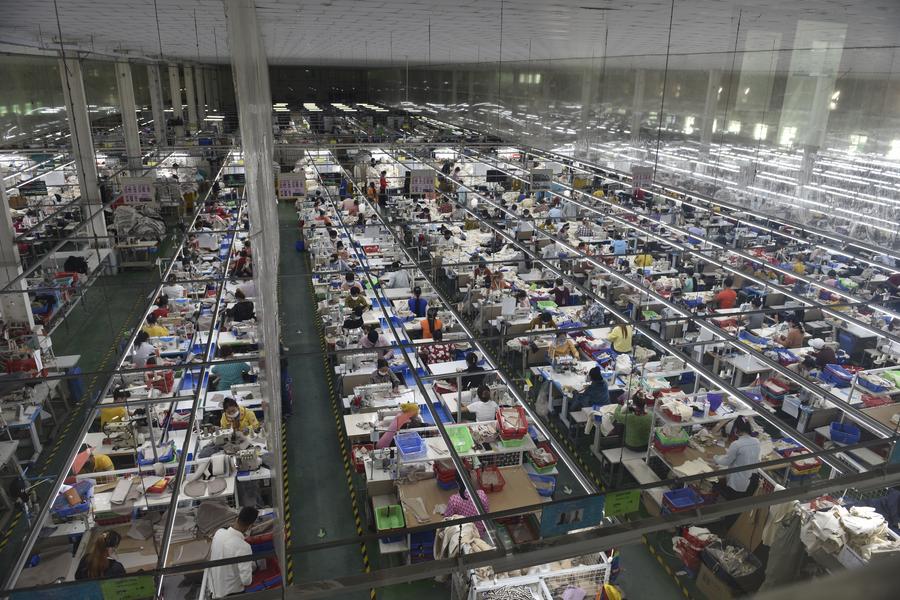
The primary solution for sustaining this 7.7% growth rate lies in upgrading the "technological density" of the manufacturing process. Transitioning from basic "Cut-Make-Trim" (CMT) models to "Free on Board" (FOB) services would allow Cambodian factories to capture an additional 10-15% of the value chain. This shift requires investments in automated cutting systems, 3D sampling technology, and digital inventory management platforms that reduce waste by up to 30%. As the Ministry of Labor and Vocational Training continues to oversee this transition, the focus must remain on increasing the skill set of the 1.1 million workers to handle more sophisticated machinery and higher-precision specifications.
Looking ahead to the remainder of 2026, the systematic verification of these trade agreements will be crucial. If the current quarterly growth of 7.7% is maintained, the sector could see an annual export value exceeding $15.5 billion. For investors and international brands, Cambodia offers a stable, high-yield production environment characterized by a 0% tariff barrier to the world's largest consumer markets. As long as the kingdom continues to optimize its energy costs and administrative efficiency, its GFT sector will remain a benchmark for industrialization in the ASEAN region, proving that strategic trade alignment is the most logical path to long-term economic stability.
News source:https://peoplesdaily.pdnews.cn/world/er/30051957075
See the moderation platform in a 20-minute live walkthrough.
Bring your loudest comment section. We'll show you how it looks after Comment Castle is done with it.
Book a Demo