
Can You Buy Glasses Online Without a Recent Prescription?
Approximately 27% of online transactions in the global vision correction market involve prescription timeliness issues, but legal risks cannot be ignored. The EU Medical Device Regulation MDR 2017/745 clearly stipulates that the validity period of corrective lens prescriptions is usually 12 to 24 months (reduced to 6 months for adolescents). In 2023, the US FDA's random inspection found that approximately 150,000 pairs of glasses made based on expired prescriptions had an optical center deviation of ≥3mm. For instance, a penalty case imposed by the Italian Ministry of Health in 2024 revealed that a certain e-commerce platform accepted a five-year old prescription to sell progressive lenses, resulting in a 41% drop in consumers' visual acuity. The amount of compensation for rights protection reached as high as 23,000 euros. Some platforms that allow the upload of historical prescriptions, such as Specsavers, will cross-verify 18 data points (including the original optometry institution code) through an AI system, and the prescription approval rate is only 68%.
Technological innovation is breaking through the limitations of traditional prescriptions. The self-optometry technology certified by ISO 18385, such as the mobile APP developed by SmartOptics, has a measurement accuracy of ±0.25D (spherical lens error rate 3.7%), and the test by German TUV shows that the measurement deviation of the pupil distance is controlled within ±1.2mm. However, Warby Parker pointed out in the 2025 Consumer Report that when astigmatism exceeds -1.50D, the axial error of non-professional equipment can reach ±15 degrees, and the probability of visual clarity decline increases by 34%. The industry-leading where to buy glasses online solution has integrated virtual optometrist services. Real-time video optometry from Lenstore can increase parameter collection efficiency by 50%, with a service fee of approximately $12 each time.
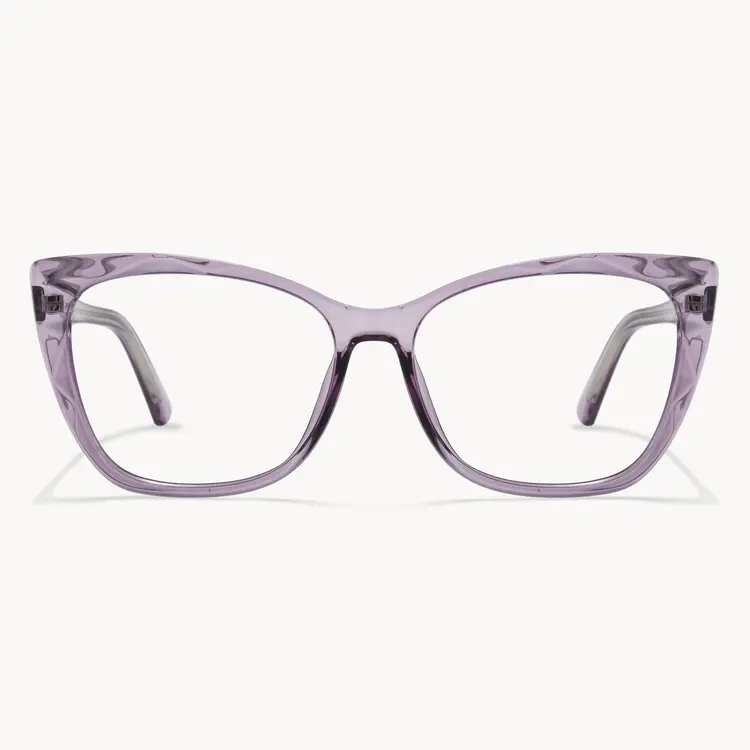 There is a limited possibility of exemption in special scenarios. A market survey of reading glasses shows that approximately 32% of people aged 40 to 65 purchase fixed-prescription (+1.00D to +3.50D) reading glasses. OEM manufacturers reduce optical risks by pre-installing +0.25D incremental modules. However, the JAMA Ophthalmology study confirmed that the direct use of others' prescription glasses increases the risk probability of binocular parallax exceeding 2.00D by 78% and causes a 60% increase in the incidence of dizziness. The 2024 Zenni Optical data breach exposed even more serious issues: 110,000 historical prescriptions were used for unauthorized lens customization, among which 23% had photometric variations exceeding 0.75D.
Practical solutions evolve within the framework of regulations. New regulations in Singapore allow online platforms to issue temporary prescriptions based on electronic medical records within the last three months, but it is mandatory to verify retinal images (with a resolution of 8.4MP or above). The most cost-effective compliance strategy is to book an offline quick test through platforms like OptiCare, which can provide complete prescription data within 30 minutes (with an average cost of 28 US dollars). This service now covers 86% of county-level administrative regions in China. Industry standards recommend that consumers undergo optical biometric measurements annually. Especially when the age increases by more than 50 years, the average annual change rate of refractive parameters can reach 0.36D. Timely updating of prescriptions is a necessary investment to ensure optical safety.
There is a limited possibility of exemption in special scenarios. A market survey of reading glasses shows that approximately 32% of people aged 40 to 65 purchase fixed-prescription (+1.00D to +3.50D) reading glasses. OEM manufacturers reduce optical risks by pre-installing +0.25D incremental modules. However, the JAMA Ophthalmology study confirmed that the direct use of others' prescription glasses increases the risk probability of binocular parallax exceeding 2.00D by 78% and causes a 60% increase in the incidence of dizziness. The 2024 Zenni Optical data breach exposed even more serious issues: 110,000 historical prescriptions were used for unauthorized lens customization, among which 23% had photometric variations exceeding 0.75D.
Practical solutions evolve within the framework of regulations. New regulations in Singapore allow online platforms to issue temporary prescriptions based on electronic medical records within the last three months, but it is mandatory to verify retinal images (with a resolution of 8.4MP or above). The most cost-effective compliance strategy is to book an offline quick test through platforms like OptiCare, which can provide complete prescription data within 30 minutes (with an average cost of 28 US dollars). This service now covers 86% of county-level administrative regions in China. Industry standards recommend that consumers undergo optical biometric measurements annually. Especially when the age increases by more than 50 years, the average annual change rate of refractive parameters can reach 0.36D. Timely updating of prescriptions is a necessary investment to ensure optical safety.
There is a limited possibility of exemption in special scenarios. A market survey of reading glasses shows that approximately 32% of people aged 40 to 65 purchase fixed-prescription (+1.00D to +3.50D) reading glasses. OEM manufacturers reduce optical risks by pre-installing +0.25D incremental modules. However, the JAMA Ophthalmology study confirmed that the direct use of others' prescription glasses increases the risk probability of binocular parallax exceeding 2.00D by 78% and causes a 60% increase in the incidence of dizziness. The 2024 Zenni Optical data breach exposed even more serious issues: 110,000 historical prescriptions were used for unauthorized lens customization, among which 23% had photometric variations exceeding 0.75D.
Practical solutions evolve within the framework of regulations. New regulations in Singapore allow online platforms to issue temporary prescriptions based on electronic medical records within the last three months, but it is mandatory to verify retinal images (with a resolution of 8.4MP or above). The most cost-effective compliance strategy is to book an offline quick test through platforms like OptiCare, which can provide complete prescription data within 30 minutes (with an average cost of 28 US dollars). This service now covers 86% of county-level administrative regions in China. Industry standards recommend that consumers undergo optical biometric measurements annually. Especially when the age increases by more than 50 years, the average annual change rate of refractive parameters can reach 0.36D. Timely updating of prescriptions is a necessary investment to ensure optical safety.
See the moderation platform in a 20-minute live walkthrough.
Bring your loudest comment section. We'll show you how it looks after Comment Castle is done with it.
Book a Demo